Looking directly at the
photosphere of the Sun (the bright disk of the Sun itself), even for just a few seconds, can cause permanent damage to the
retina of the eye, because of the intense visible and invisible radiation that the photosphere emits. This damage can result in permanent impairment of vision, up to and including
blindness. The retina has no sensitivity to pain, and the effects of retinal damage may not appear for hours, so there is no warning that injury is occurring.

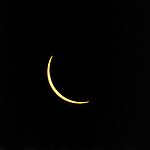
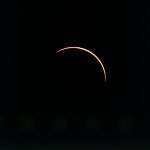
Under normal conditions, the Sun is so bright that it is difficult to stare at it directly, so there is no tendency to look at it in a way that might damage the eye. However, during an eclipse, with so much of the Sun covered, it is easier and more tempting to stare at it. Unfortunately, looking at the Sun during an eclipse is just as dangerous as looking at it outside an eclipse, except during the brief period of totality, when the Sun's disk is completely covered (totality occurs only during a total eclipse and only very briefly; it does not occur during a partial or annular eclipse). Viewing the Sun's disk through any kind of optical aid (binoculars, a telescope, or even an optical camera viewfinder) is extremely hazardous and can cause irreversible eye damage in a fraction of a second.

Glancing at the Sun with all or most of its disk visible is unlikely to result in permanent harm, as the pupil will close down and reduce the brightness of the whole scene. If the eclipse is near total, the low average amount of light causes the pupil to open. Unfortunately the remaining parts of the Sun are still just as bright, so they are now brighter on the retina than when looking at a full Sun. As the eye has a small
fovea, for detailed viewing, the tendency will be to track the image on to this best part of the retina, causing damage.






No comments:
Post a Comment